


Table of Contents
- What Happens at Your First Botox Appointment
- How Long Does Botox Take to Work?
- Botox Aftercare Instructions for Best Results
- Finding a Qualified Botox Injector
- Preparing for Your First Botox Treatment
- Botox vs. Dermal Fillers: What’s the Difference?
- Managing Anxiety and Setting Realistic Expectations
- Long-Term Maintenance and Planning
- Frequently Asked Questions
Last Updated: October 13, 2026
What Happens at Your First Botox Appointment
Getting Botox for the first time starts with a conversation, not a needle. At Simple Beauty Studio, every first visit centers on your goals and confirming you’re a good candidate.
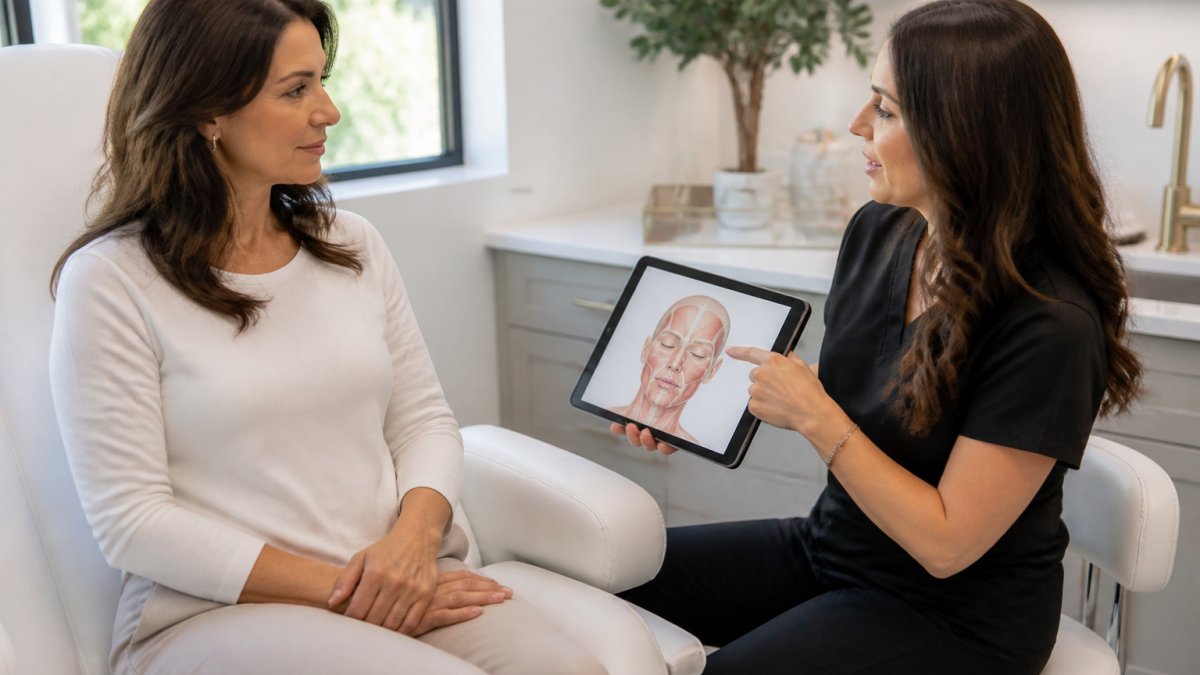
The Consultation and Medical History Review
Your provider reviews your medical history first: medications, allergies, prior cosmetic procedures, and neuromuscular conditions, since these affect whether a neurotoxin injectable is appropriate.
Be upfront about everything, including supplements and over-the-counter drugs, some blood thinners and supplements increase bruising risk.
Skin Analysis and Treatment Planning
Next comes a skin analysis. Your provider watches how your muscles move when you raise your brows, squint, and smile, revealing which dynamic wrinkles a neurotoxin can treat and which fine lines need a different approach.
From there, you’ll discuss dosage in units, which areas to treat, and what a natural-looking result means for your face. Glabellar lines, forehead furrows, and crow’s feet are the most common starting points.
Bring a list of every medication and supplement you take, including dosage. Most first-time bruising complaints trace back to something a client forgot to mention during the medical history review.
How Long Does Botox Take to Work?
Botox does not work overnight. Most people see early changes within 3 to 5 days, with full results around the two-week mark.
Days 1-3: Early Changes
The first few days are quiet. You may notice nothing, or a slight softening when you raise your eyebrows, as the neurotoxin begins blocking muscle contraction.
Don’t panic if one side looks different early on, asymmetry during onset is common and usually evens out.
Days 4-14: Full Results Emerge
Between days 4 and 14, treated muscles relax progressively: forehead furrows smooth out, crow’s feet soften, and glabellar lines fade. By day 14, what you see is what you get for this round.
If results seem uneven at your follow-up, your injector can make small adjustments.
Botox Aftercare Instructions for Best Results
Aftercare is where first-timers accidentally shorten their own results. The rules are simple, but understanding why each one exists makes you less likely to break them.
The First 4 Hours: Keep It Upright
The neurotoxin needs time to bind to the nerve endings it’s targeting. Until then, gravity and pressure can move it into muscles you didn’t intend to treat, hence the most important rule: stay upright for at least 4 hours after your appointment.
In practice: no napping, no reclining, no bending forward. If you wear glasses, lift them off rather than sliding them down your nose, repeated pressure on the glabella can nudge the product.
The First 24 Hours: Skip the Sweat
Strenuous exercise raises blood pressure and blood flow to the face, increasing bruising odds and potentially speeding dispersal of the neurotoxin before it settles.
Also avoid anything that heats the face: saunas, steam rooms, hot showers, and blow dryers held close to the skin. Heat dilates blood vessels, and dilated vessels bruise more easily.
The First 48 Hours: Hands Off
Do not rub, massage, or press on the treated areas, the most common self-inflicted complication.
Skip facials, chemical peels, microdermabrasion, and anything involving pressure or manipulation of the face for 48 hours. Keep skincare gentle: cleanse with lukewarm water, pat dry, and avoid retinoids or exfoliating acids on treated areas for a day or two.
Sleeping Position Matters More Than Most Guides Admit
You can’t control what you do while asleep, but you can control how you fall asleep. For the first night or two, sleep on your back with your head slightly elevated.
If back-sleeping is impossible, at minimum avoid sleeping face-down. A travel pillow or rolled towel under the chin can help keep you off your stomach.
Ice, Arnica, and What Actually Helps
Mild bruising or swelling at the injection sites is the most common side effect and typically fades within a few days.
Arnica creams and oral arnica are popular, though clinical evidence is mixed. If you’re prone to bruising, the more reliable prevention is stopping blood thinners and certain supplements in the week before treatment, with your doctor’s approval.
Rubbing the treated area within the first few hours is a common mistake. It can push the neurotoxin into adjacent muscles and cause a droopy eyelid or an uneven brow that takes weeks to resolve. Hands off means hands off.
A Quick Aftercare Timeline
- Hours 0-4: Stay upright. No napping, no bending forward, no pressure on the face.
- Hours 4-24: No strenuous exercise, no saunas or steam, no hot showers.
- Hours 24-48: No facials, no massage, no exfoliating skincare on treated areas. Sleep on your back if you can.
Finding a Qualified Botox Injector
The single most important decision you’ll make is who holds the syringe. A qualified injector is a licensed medical professional, physician, nurse practitioner, or physician assistant, with specific training in facial anatomy and injectable techniques.
Ask direct questions before booking:
- Who will perform the injection, and what are their credentials?
- How many injectable treatments have they performed?
- What is their plan if you’re unhappy with the result? (Source: clinical studies on the efficacy and duration of botulinum toxin injections)
A qualified provider with a facial anatomy background assesses your muscle movement patterns rather than injecting a standard template, the difference between natural-looking results and a frozen or surprised expression.
Preparing for Your First Botox Treatment
Preparation starts about a week before your appointment. Avoiding blood thinners and certain supplements, with your doctor’s approval, can reduce bruising.
On treatment day, arrive with a clean face and no makeup if possible. Skip your morning workout.
For anyone with needle anxiety, tell your provider at the start.
Botox vs. Dermal Fillers: What’s the Difference?
These two treatments solve different problems, and confusing them leads to disappointment. Botox relaxes facial muscles to soften dynamic wrinkles, the lines that appear when you move your face. Dermal fillers add volume to restore structure, plumping static lines and hollow areas visible even at rest.
If your forehead lines deepen when you raise your brows, that’s a neurotoxin case. If your cheeks look flatter or nasolabial folds are visible when your face is still, fillers address that. Many clients eventually use both.
Managing Anxiety and Setting Realistic Expectations
Nervousness before a first treatment is normal and usually fades once you understand the process.
Realistic expectations mean understanding that Botox softens lines, it does not erase them. It won’t change your face shape or replace a skincare routine. What it does well is relax specific muscles so dynamic wrinkles fade while your expressions stay natural.
The best first Botox result is one nobody notices. You should still look like yourself, just with softer lines.
Long-Term Maintenance and Planning
Most first-timer guides stop at the injection. The part nobody explains is what the next 3 to 6 months look like, and how to plan for it so you’re not surprised when your forehead starts moving again.
The Realistic Results Timeline
Botox is a maintenance treatment, not a one-time fix. Here’s the pattern most patients experience:
- Weeks 1-2: Full effect. This is your baseline for judging the result.
- Months 2-3: Peak effect holds. Most people look their smoothest in this window.
- Month 3: The first subtle movement returns. You may notice a faint line when you raise your brows.
The 3-to-4-month figure is an average. Metabolism, dosage, treatment area, and how aggressively your muscles move all shift the number: very active foreheads often need treatment closer to 3 months, while slower metabolisms can stretch to 5 or 6.
Why Some People Need Less Over Time
A common pattern is that consistent treatment gradually weakens the treated muscles. Muscles used less often lose mass and force, so the same dose lasts longer. Many long-term patients space treatments further apart or use fewer units than in year one.
This is not universal. Some people need the same dose indefinitely.
The Two Philosophies: Prevention vs. Correction
Some people start in their late 20s or early 30s, before lines are etched in, aiming to slow static wrinkle formation. Others start later and focus on softening existing lines.
Preventative treatment usually means smaller doses in a narrower area on a consistent schedule for years. Corrective treatment often starts with a fuller dose across more areas and may combine with other modalities if static lines have formed.
Planning the Next 6 Months
To stay ahead of returning movement, book your next appointment at the 3-month mark rather than waiting until you see lines again. Waiting until you’re unhappy means weeks at baseline before the next treatment kicks in.
A simple planning cadence:
- Month 0: First treatment. Two-week follow-up.
- Month 3: Second treatment if you’re on a 3-month cycle, or a check-in if you’re stretching longer.
- Month 6: Third treatment or reassessment. This is a good point to review whether your dose and interval are still right.
The Cost of Ownership
Botox is priced per unit, and most first-time treatments in the glabella, forehead, and crow’s feet run 20 to 60 units total depending on muscle strength and how many areas you treat.
Many practices offer membership or loyalty programs that reduce per-unit cost for patients on a regular schedule. Simple Beauty Studio offers convenient membership options for affordable and consistent self-care.
Lifestyle Habits That Support Your Results
Post-treatment lifestyle habits matter too. Consistent sun protection slows the collagen breakdown that turns dynamic lines into static ones. Hydration and a solid skincare routine, particularly retinoids and antioxidants, support skin quality between appointments.
Clients who treat aesthetic care as an ongoing relationship rather than a one-off purchase tend to be happier with how they age.
Plan your maintenance before you need it. Book the next appointment at the 3-month mark, track your units and intervals, and treat the whole thing as a schedule rather than a series of one-off purchases. That’s what separates people who love their results from people who feel like they’re constantly playing catch-up.
At Simple Beauty Studio, our membership options are built around exactly that idea: consistent, affordable access to the treatments you actually use, with the convenience of hair, skin, and aesthetic services under one roof. If you’re in North Naples, Bonita Springs, or Estero and thinking about getting Botox for the first time, our team will walk you through every step without pressure.
Frequently Asked Questions
How do I know if Botox is right for me?
Botox works best for dynamic wrinkles caused by repeated facial muscle contractions, such as crow’s feet, glabellar lines, and forehead furrows. If your lines are visible at rest, you may need a different treatment. A consultation with a qualified injector will include a skin analysis and medical history review to determine whether Botox aligns with your aesthetic goals.
Is it bad to get Botox too early?
There is no minimum age for Botox, but the FDA approves it for adults 18 and older. Preventative Botox is increasingly common for people in their late 20s and 30s who want to slow the formation of fine lines. The key is whether you have dynamic wrinkles that bother you. A qualified injector can assess your facial muscles and help you decide if treatment makes sense now or later.
How long does Botox last for first-timers?
Most first-time patients see results for 3 to 4 months, though this varies based on your metabolism, the dosage used, and the treatment area. Some people notice effects fading sooner in areas with stronger muscle contraction, like the glabellar lines. Your injector can help you plan a maintenance schedule after your follow-up appointment.
Are there any side effects to consider before your first Botox session?
Common side effects include mild bruising, swelling, and temporary redness at injection sites. Less common effects include headache or a heaviness feeling in the treated area. Serious complications are rare when Botox is administered by a qualified injector. Tell your provider about all medications and supplements, especially blood thinners, before your appointment to reduce bruising risk.
What should I avoid after getting Botox?
For the first 24 hours, avoid rubbing or massaging the treated area, lying flat, strenuous exercise, alcohol, and extreme heat. These precautions help prevent the neurotoxin from spreading to unintended facial muscles. Follow your injector’s specific Botox aftercare instructions, which may also include avoiding certain medications or supplements that increase bruising.
Can Botox look natural?
Yes. A skilled injector uses conservative dosage and units tailored to your facial muscles and aesthetic goals. The goal is to soften dynamic wrinkles while preserving natural facial expressions. Communicate your concerns about looking frozen or overdone during your consultation, and ask for a natural-looking result. A follow-up appointment two weeks later allows fine-tuning if needed.
What is the difference between Botox and dermal fillers?
Botox is a neurotoxin that relaxes facial muscles to reduce dynamic wrinkles. Dermal fillers are injectable gels, often hyaluronic acid, that add volume to areas with static lines or volume loss, such as nasolabial folds or lips. Many patients combine both for comprehensive facial rejuvenation. Your injector can recommend which option, or combination, suits your concerns.
Getting Botox for the first time raises real questions, and the right provider answers them before you commit to anything. If you want a consultation that starts with your goals rather than a sales pitch, Simple Beauty Studio offers expert aesthetic providers, membership pricing that makes consistent care affordable, and a full-service salon and medical spa experience in one convenient location. Book your appointment and find out what a personalized treatment plan looks like for your face.