


Table of Contents
- HydraFacial Benefits for Aging Skin: What the Treatment Actually Does
- Hydration, Plumper Skin, and a Stronger Moisture Barrier
- HydraFacial for Fine Lines and Wrinkles
- Texture, Tone, and Pore Congestion: What Changes on the Surface
- HydraFacial Results and How Long They Last
- HydraFacial Side Effects and Downsides
- HydraFacial Treatment Frequency and What It Costs Over a Year
- How HydraFacial Compares With Other Anti-Aging Treatments
- Frequently Asked Questions
Last Updated: October 19, 2026
HydraFacial Benefits for Aging Skin: What the Treatment Actually Does
HydraFacial benefits for aging skin come down to one thing: the treatment delivers hydration and gentle resurfacing in the same session, with no downtime.
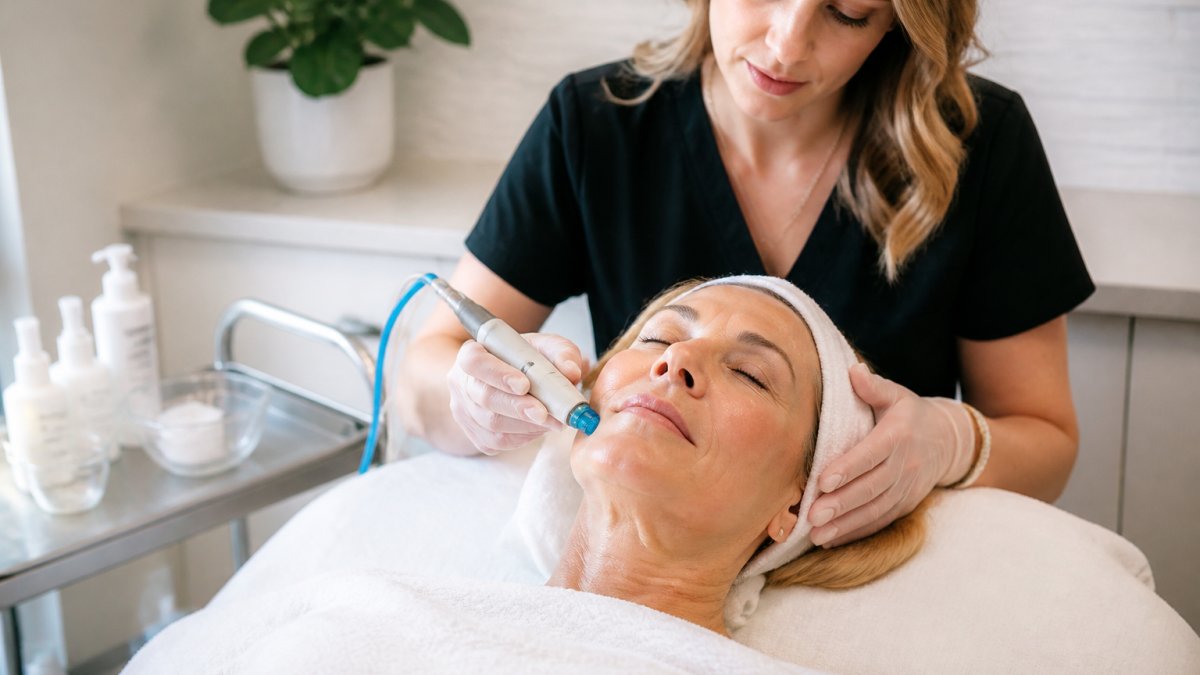
The honest framing matters here. A HydraFacial is a maintenance treatment, not a facelift in a bottle.
Below, we break down what the treatment actually does, what results are realistic, and how to decide whether it fits your routine.
How the Three-Step Process Works
Every HydraFacial follows the same core sequence: cleanse and peel, extract and hydrate, then fuse and protect.
- Cleanse and peel. A deplaning tip loosens dead skin cells and lifts surface oil without the grit of a scrub.
- Extract and hydrate. A vortex tip applies gentle suction to clear pores while simultaneously delivering moisturizing serum.
- Fuse and protect. Antioxidants, peptides, and hyaluronic acid are pressed into the skin to finish.
The appeal for aging skin is that exfoliation and hydration happen together. Aggressive scrubs can leave mature skin tight and irritated; this approach is gentler by design. The American Academy of Dermatology’s guidance on facial treatments is a useful starting point for understanding what professional facials can and cannot do.
Hydration, Plumper Skin, and a Stronger Moisture Barrier
The most immediate HydraFacial benefit is hydration, and it shows up the same day. As skin ages, it loses moisture faster and produces less oil, so the barrier that holds water in weakens.
What most guides miss: the plumpness you see after a facial is partly water retention in the upper layers, not new collagen. It looks good and it feels good, but it fades.
Schedule your HydraFacial three to five days before an event, not the day before. Skin looks its best in that window, once any mild redness has settled.
HydraFacial for Fine Lines and Wrinkles
HydraFacial can soften the appearance of fine lines and wrinkles, but it will not remove them. The distinction matters because the two categories of lines on an aging face respond to very different things, and only one of them is within a facial’s reach.
Two kinds of lines, two different mechanisms
Dermatologists generally split facial lines into two groups. Dynamic lines are creases formed by repeated muscle movement, crow’s feet, forehead furrows, the vertical lines between the brows.
A HydraFacial works on the surface and the upper layers. It cannot relax a muscle, and it does not remodel the dermis the way a laser or microneedling device does. What it can do is change the surface conditions that make static lines look sharper than they are.
The mechanism, step by step
Three things happen during a session that affect how lines appear:
- Exfoliation smooths the surface. Dead cells pile up unevenly, and that unevenness catches light and casts tiny shadows that exaggerate creases. Removing that layer makes the skin reflect light more evenly, so lines look softer, a lighting and texture effect, not a structural change.
- Hydration plumps the stratum corneum. Hyaluronic acid holds many times its weight in water, and when the top layer is well hydrated it swells slightly. That swelling pushes fine lines outward and makes them less visible. This is the same reason a well-moisturized face looks smoother in the morning than it does after a long, dry day.
- Serum delivery supports the barrier. Antioxidants and peptides in the fusion step help the skin’s surface defend itself, which over time reduces the dullness and roughness that make texture look older.
What the evidence actually supports
The honest read: the evidence for HydraFacial specifically is mostly clinical and observational, provider-reported outcomes, before-and-after photography, and patient satisfaction, rather than large controlled trials. The general principles behind it are well established: exfoliation improves texture, hydration reduces the appearance of fine lines, and antioxidants support the skin barrier. What is not established is that a facial series produces lasting collagen remodeling on the scale of a device-based treatment.
Which lines respond, and which don’t
| Line type | Typical location | Likely response to HydraFacial |
|---|---|---|
| Fine surface lines from dryness | Cheeks, around the eyes | Noticeable softening, especially same-day |
| Crepey texture | Neck, under the eyes | Gradual improvement over a series |
| Static lines from sun damage | Cheeks, upper lip | Mild softening; pigmentation may persist |
| Dynamic lines from muscle movement | Forehead, between brows, crow’s feet | Little to no change |
| Deep folds from volume loss | Nasolabial folds, marionette lines | No meaningful change |
If your main concern is etched-in lines around the mouth or forehead, a facial alone will disappoint you, those need a different category of treatment. If your concern is crepey texture and dullness that make lines look worse, a HydraFacial series can help noticeably, and it pairs well with treatments that address the deeper layers.
This is where realistic expectations separate a good provider from a pushy one. A consultation should include a candid conversation about which of your lines are surface-level and which are structural, and what combination of treatments, if any, makes sense for your goals and budget.
Texture, Tone, and Pore Congestion: What Changes on the Surface
Surface improvements are the most reliable part of the HydraFacial story. Exfoliation removes the buildup of dead skin cells that scatters light and leaves skin looking gray.
- Texture: rougher patches on cheeks and jaw soften
- Tone: dullness lifts, and mild discoloration appears less obvious
- Pores: clearing congestion makes pores look smaller, though it does not change their actual size
One caveat: pigmentation and deeper discoloration respond slowly, if at all, to facials. If sun spots are your priority, ask about targeted treatments during your consultation rather than expecting a facial to handle it.
HydraFacial Results and How Long They Last
HydraFacial results typically last four to six weeks, which is why most providers recommend a monthly schedule for maintenance. The glow is immediate; the hydration boost peaks in the first few days and gradually fades.
Results by Age and Degree of Sun Damage
Outcomes vary more by skin condition than by birthday. Someone in their thirties with minimal sun exposure may see a bright, smooth finish after one session. Someone in their sixties with significant photoaging will see improvement in texture and hydration but should expect a series of treatments and a candid conversation about what else might help. No provider can promise identical results across different skin histories.
Skip the treatment if you have active breakouts, open skin, or a sunburn. Treating compromised skin can worsen irritation and set your recovery back.
HydraFacial Side Effects and Downsides
Side effects are usually mild and short-lived: temporary redness, slight tightness, and occasional sensitivity for a day or two. Serious reactions are uncommon but possible, particularly for people with sensitive skin or active rosacea.
The bigger downside is cost and commitment. A single facial is a treat; a monthly habit is an investment. There is also a limit to what any facial can do for structural aging, so pair it with a home routine that includes sun protection and a moisturizer that suits your skin.
HydraFacial Treatment Frequency and What It Costs Over a Year
Most providers suggest one session every four to six weeks, which works out to roughly eight to twelve treatments a year. That schedule keeps hydration and texture benefits from fully fading between visits. Stretch it past six weeks and the glow and plumpness you paid for have largely worn off before the next appointment.
What a session typically costs
Pricing varies by market, provider type, and add-ons. Treat them as planning figures, not quotes, always ask for a written price list.
| Setting | Typical per-session range | Notes |
|---|---|---|
| Medical spa or dermatology office | $150-$250 | Higher end often includes a provider exam |
| Day spa or salon | $100-$175 | Confirm the esthetician’s licensing and training |
| Membership or package pricing | $99-$175 per session | Usually requires a monthly commitment |
| Add-ons (light therapy, boosters, targeted serums) | $25-$75 each | Can push a single visit past $300 |
The annual math
Membership pricing can bring the per-session cost down, but only if you actually attend, unused monthly sessions are the most common way people overspend on facials.
How to compare packages without getting burned
- Ask for the per-session effective price, not the monthly membership fee.
- Check the cancellation and freeze policy. Life happens; a membership you can’t pause is a membership you’ll resent.
- Confirm what’s included. Cleansing, extraction, and the standard serum fusion should be in the base price. Light therapy, lymphatic drainage, and targeted boosters are often extra.
If you’re testing whether HydraFacial is worth it for your skin, book a single session first. A provider who pushes a twelve-month membership before you’ve had one treatment is optimizing for their calendar, not your results.
Is the annual cost worth it?
That depends on what you’re comparing it to. A year of monthly facials costs roughly what a single session of many laser treatments or a few syringes of filler cost, but it does a different job. Facials maintain surface hydration and texture; they don’t replace treatments that address structural aging. The most cost-effective approach for most people is a maintenance facial schedule layered on top of a solid home routine (sunscreen, a moisturizer that suits your skin, and a gentle cleanser), not a facial habit standing in for one.
How HydraFacial Compares With Other Anti-Aging Treatments
HydraFacial sits at the gentle, no-downtime end of the anti-aging spectrum. It is not a substitute for injectables, lasers, or microneedling, and it is not meant to be.
- Versus injectables: Botox and fillers address muscle movement and volume; a facial addresses surface texture and hydration. They solve different problems and often work well together.
- Versus lasers: Lasers remodel deeper skin layers and carry real downtime. Facials offer smaller, faster results with minimal risk.
- Versus at-home care: No facial replaces daily sun protection and consistent moisturizing. The treatment amplifies a good routine; it doesn’t replace one.
The U.S. Food and Drug Administration’s consumer information on aesthetic devices is worth reading if you’re weighing device-based treatments, and the National Institute on Aging’s skin care guidance covers the basics of caring for aging skin at home.
The right choice depends on your goals, your budget, and how much downtime you can afford. A consultation is the only way to get a straight answer for your skin.
Frequently Asked Questions
How long after a HydraFacial will I see results?
Most people notice brighter, softer skin the same day, once the mild redness from cleansing and extractions settles. The biggest jump in hydration and glow usually shows up within 24 to 48 hours as serums settle into the skin. Fine lines look softer in that window too, mainly because the surface is hydrated rather than because collagen has changed. For texture, tone, and pore appearance, plan on a series of sessions spaced a few weeks apart, since each treatment builds on the last.
What are the downsides of a HydraFacial?
The most common side effects are temporary redness, tightness, and slight sensitivity for a few hours to a day, especially after extractions. People with sensitive skin or active rosacea may flush longer. Results fade without maintenance, and a single session will not reshape deep wrinkles, sagging, or volume loss the way injectables or energy devices can. Anyone using prescription retinoids or recently treated with certain lasers may need to pause actives beforehand, so tell your provider what is in your routine.
Is HydraFacial safe for mature or sensitive skin?
HydraFacial is generally well tolerated because the exfoliation is mechanical rather than a strong chemical peel, and the suction and serum steps can be adjusted. Mature skin often benefits most from the hydration step, since thinner skin loses moisture faster. Sensitive skin still deserves a patch of caution: ask for lower suction, skip aggressive add-ons, and avoid booking right before a big event. A consultation lets a provider review your medications, allergies, and any recent aesthetic treatments before deciding what is appropriate.
How often should I get a HydraFacial for aging skin?
A common starting schedule is one session every four weeks for the first three to six visits, then spacing treatments every four to eight weeks to maintain hydration and glow. HydraFacial treatment frequency depends on your skin type, how much sun exposure you get, and whether you use prescription topicals at home. People with oily or congested skin may do well monthly, while drier or more sensitive skin may prefer every six weeks. Ask your provider to set a schedule and adjust it based on how your skin responds.
Aging skin needs consistency more than it needs heroics, and that is exactly where a monthly HydraFacial fits. At Simple Beauty Studio, our licensed providers pair HydraFacials with a full menu of medical spa and salon services under one roof, so your routine stays simple. Members get exclusive pricing that makes regular visits easier to sustain, and every appointment starts with a real conversation about your goals. Book your appointment and find out what a steady schedule can do for your skin.